States Where Sweepstakes Casinos Are Banned: Complete 2026 List
 Available in US
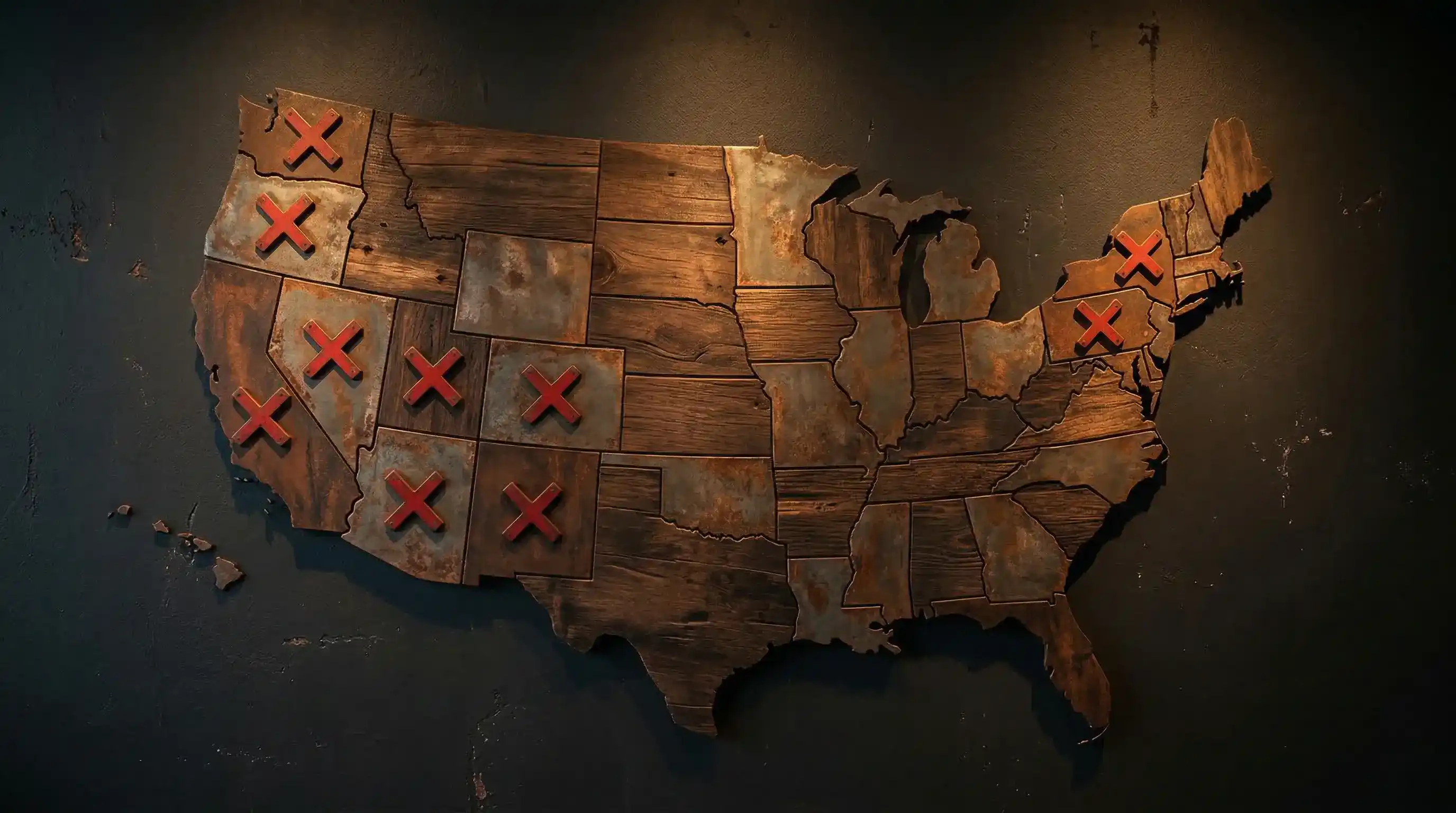
Know before you play. While sweepstakes casinos operate legally across most of America, several states have explicitly banned these platforms or interpret existing gambling laws to prohibit them. Attempting to play from a banned state risks account termination, forfeited balances, and potential legal consequences. Understanding which states prohibit sweepstakes casinos—and why—helps you avoid wasted time and money on platforms that will ultimately block your access.
The banned state list has grown significantly in 2025 and 2026 as regulators and legislators respond to the industry’s explosive growth. What was once a niche entertainment option now generates billions in annual revenue, attracting attention from state attorneys general concerned about consumer protection, gambling regulators worried about unlicensed competition, and legislators responding to constituent complaints. The regulatory landscape continues shifting, making current information essential for any prospective player.
Complete Banned States List
Washington State maintains the longest-standing and most aggressive ban on sweepstakes casinos. State law classifies online gambling broadly, and prosecutors have consistently interpreted this to include sweepstakes models. Platforms universally block Washington IP addresses and reject registrations listing Washington addresses. The state’s position remains unchanged despite industry growth elsewhere.
Idaho prohibits sweepstakes casinos under its strict anti-gambling statutes. The state allows almost no gambling beyond the state lottery and tribal gaming, leaving no regulatory pathway for sweepstakes platforms. Attempts to operate in Idaho would face immediate legal challenge with minimal defense options.
Nevada’s ban reflects different concerns. The state’s regulated casino industry views sweepstakes platforms as unlicensed competition. Nevada Gaming Control Board guidance treats sweepstakes casinos as illegal gambling operations, protecting the licensed casinos that drive the state’s economy. The irony of America’s gambling capital banning sweepstakes casinos stems from regulatory capture rather than moral opposition.
Michigan banned sweepstakes casinos after launching its own regulated online gambling market. The state determined that sweepstakes platforms competed unfairly with licensed operators paying taxes and meeting regulatory requirements. Michigan’s position represents a template other states with legal iGaming may follow—why tolerate unlicensed competition when you’ve built a regulated alternative?
Montana restricts sweepstakes casinos under its gambling regulations, though enforcement has been less aggressive than in other banned states. The state’s rural character and limited internet infrastructure may reduce practical enforcement priority, but the legal prohibition remains on the books.
California joined the banned list when Governor Newsom signed AB 831 on October 11, 2025, effective January 1, 2026. The law explicitly prohibits sweepstakes casinos, imposing fines up to $25,000 and potential jail time for operators. California’s massive population makes this ban particularly significant for the industry—losing access to 39 million potential customers represents a substantial market contraction.
New York’s ban followed California’s lead. Governor Hochul signed S.5935A on December 8, 2025, prohibiting sweepstakes casinos statewide. The law responded to Attorney General Letitia James’s enforcement campaign, which had already issued 26 cease-and-desist orders against platforms operating in the state. New York’s ban removed another major population center from the sweepstakes casino market.
States Where Sweepstakes Casinos Are Banned — More on this topic at free sweepstakes casino.
Why States Ban
Consumer protection concerns drive many bans. Attorneys general receive complaints about sweepstakes casinos—players who lost money they couldn’t afford, confusing terms obscuring redemption requirements, customer service failures leaving balances inaccessible. These complaints accumulate into political pressure for action, regardless of whether sweepstakes casinos cause more harm than other entertainment spending.
Revenue protection motivates states with regulated gambling markets. Licensed casinos and online gambling operators pay substantial taxes and fees. Sweepstakes casinos operating under promotional sweepstakes frameworks pay neither, creating competitive disadvantage for regulated operators. Industry lobbying from licensed operators often precedes sweepstakes bans in gambling-legal states.
Legal uncertainty about the sweepstakes model encourages precautionary bans. States uncomfortable with the promotional sweepstakes theory—that free entry options transform gambling into legal promotions—prefer prohibition to potential litigation. Banning sweepstakes casinos eliminates legal ambiguity without requiring courts to rule on the model’s validity.
Tribal gaming interests influence some state positions. Tribal casinos operate under compacts that may include exclusivity provisions. Sweepstakes casinos potentially violate these agreements, creating legal complications for states that allowed them. Protecting tribal relationships sometimes outweighs consumer demand for sweepstakes access.
Enforcement Actions
New York’s enforcement campaign demonstrates aggressive state action. Attorney General Letitia James issued 26 cease-and-desist orders against sweepstakes casino operators in 2025, demanding they stop serving New York residents. Brian O’Dwyer, a gaming law expert, observed that these enforcement patterns suggest states are “treating sweepstakes casinos as illegal gambling operations rather than legitimate promotional sweepstakes.” The orders preceded legislative action, showing that states can act against sweepstakes casinos even without specific prohibitory statutes.
Tennessee has pursued similar enforcement. The state attorney general issued approximately 40 cease-and-desist orders against sweepstakes operations in late 2025, targeting both online platforms and physical establishments operating sweepstakes-style games. Tennessee’s actions signal expanding enforcement beyond the traditionally banned states.
California’s new law creates criminal penalties for operators. The $25,000 fines and potential one-year jail sentences represent meaningful deterrence for platforms considering continued California service. Enforcement will likely focus on operators rather than individual players, but the legal risk extends to anyone facilitating sweepstakes casino access in the state.
Platform responses to enforcement vary. Most major sweepstakes casinos immediately block access from banned states, implementing IP detection and address verification to prevent prohibited play. Smaller or offshore operators may continue serving banned states, accepting legal risk in exchange for continued revenue. Players using such platforms face forfeiture risk if their location is eventually detected.
See also Sweepstakes vs Real Money Casinos.
Recent Additions
The 2025-2026 period transformed the banned states landscape. California and New York—two of America’s three largest states by population—joined the prohibited list within months of each other. Combined, these states represent over 60 million residents now blocked from legal sweepstakes casino access.
New Jersey enacted regulatory requirements in 2025 that effectively restrict sweepstakes casino operations. While not an outright ban, the compliance requirements and potential fines of $100,000 to $250,000 make New Jersey operation commercially impractical for most platforms. The regulatory approach achieves prohibition through economics rather than criminal law.
Additional states are considering restrictions. Legislative proposals have appeared in several states following California and New York’s lead. The industry’s rapid growth guarantees continued regulatory attention, and more bans seem likely as the 2026 legislative sessions progress.
The pattern suggests sweepstakes casinos face an increasingly hostile regulatory environment. States that previously tolerated the industry through inattention are now actively considering their positions. The window for unregulated nationwide operation appears to be closing.
VPN Risks
Some players attempt to circumvent geographic restrictions using VPNs—virtual private networks that mask their actual location. This approach carries significant risks that typically outweigh any potential benefits.
Terms of service universally prohibit VPN use and location spoofing. Platforms that detect VPN usage will terminate accounts and forfeit balances without appeal. Detection methods have grown sophisticated; platforms cross-reference IP locations with payment addresses, identification documents, and behavioral patterns to identify location fraud.
Legal consequences extend beyond account termination. Playing from a banned state may violate state gambling laws regardless of how you access the platform. Criminal prosecution of individual players remains rare, but the legal exposure exists. Forfeited winnings compound the problem—you could face both lost money and potential legal liability.
Redemption failures expose VPN users even when play seems successful. KYC verification requires documents showing your actual residence. Platforms will reject redemptions when your verified address conflicts with your claimed playing location. You might accumulate substantial Sweeps Coin balances that become worthless when you can’t pass redemption verification.
Know before you play. If your state prohibits sweepstakes casinos, the prohibition exists for reasons you may or may not agree with, but circumventing it creates risks that responsible players should avoid. The industry continues evolving; states currently banning sweepstakes casinos may eventually regulate them, and currently permissive states may impose new restrictions. Monitor your state’s legal landscape and adjust your participation accordingly.
Created by the "Free Sweepstakes Casino" editorial team.