Sweepstakes Casino Legal States 2026: Complete State-by-State Guide
 Available in US
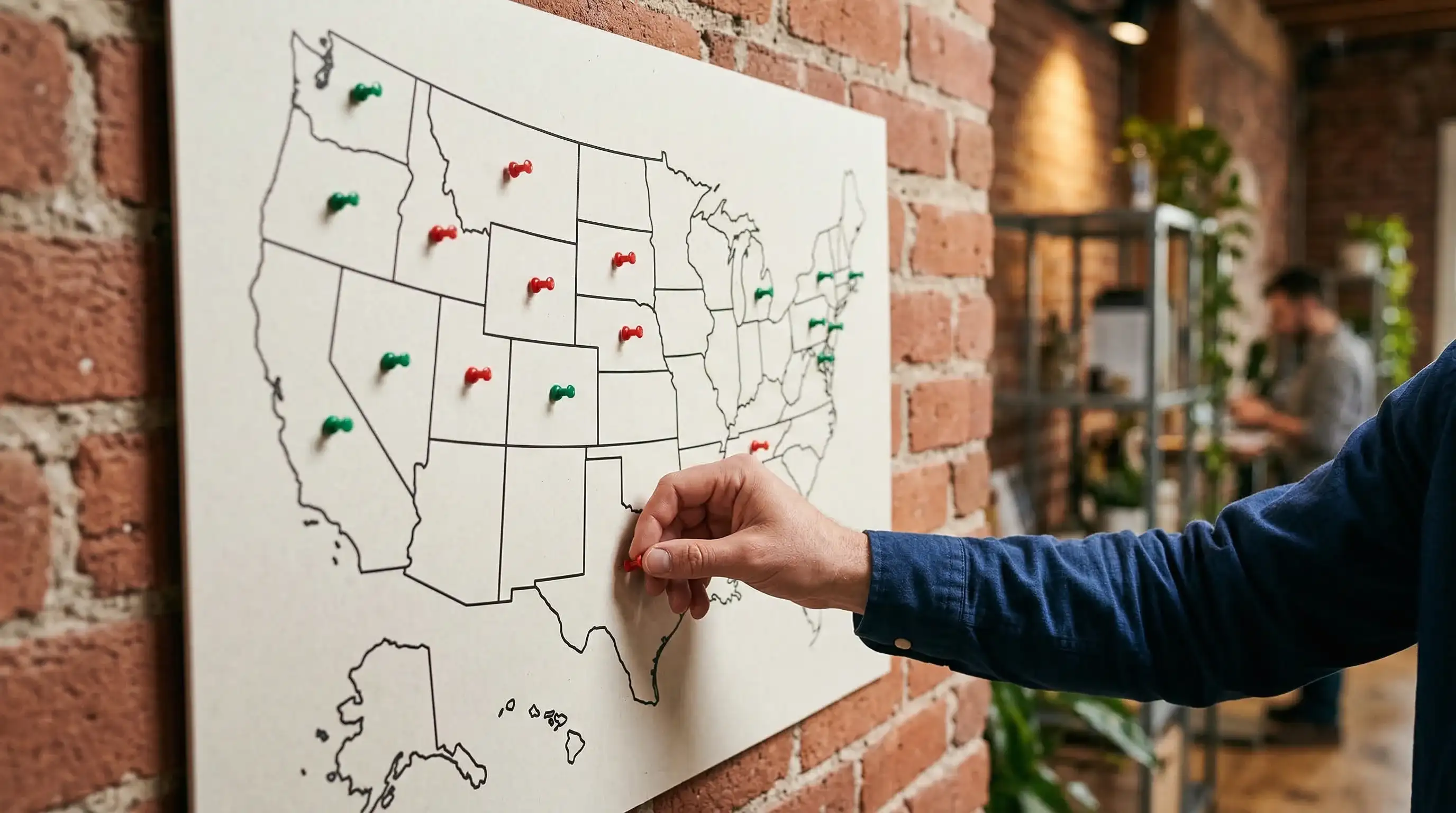
Sweepstakes casinos operate in a legal landscape that looks nothing like traditional online gambling. While real-money iGaming remains restricted to a handful of states with explicit licensing frameworks, sweepstakes platforms have carved out access across most of the country. The distinction matters: sweepstakes casinos are currently accessible in more than 35 states, compared to just seven states (plus one for poker-only) where licensed online casinos can legally operate.
That accessibility isn’t uniform, and it’s changing fast. The 2025-2026 legislative cycle brought the most significant restrictions the sweepstakes industry has faced. California banned sweepstakes casinos effective January 2026. New York followed with its own prohibition in December 2025. New Jersey implemented aggressive regulation with penalties reaching $250,000 for violations. Other states are watching these developments and considering their own responses.
The result is a patchwork of availability that requires checking your state’s current status before assuming you can play. What worked last year might not work today. States that currently allow sweepstakes casinos could restrict them tomorrow. The legal gray zone that allowed the industry to expand so rapidly is the same gray zone that makes its future unpredictable.
Understanding the legal landscape matters for practical reasons beyond simple access. States with active enforcement campaigns might pursue players who circumvent restrictions. States considering legislation might change status with little warning. And platforms themselves make different decisions about which states to serve, based on their own legal risk assessments that don’t always align with official state positions.
This guide provides the current legal status of sweepstakes casinos in every U.S. state, updated to reflect 2026 legislative changes. It covers where you can play, where you can’t, why the laws differ, and how to verify access from your specific location. The goal is straightforward: give you the facts you need to understand whether sweepstakes casinos are available where you live.
How Sweepstakes Casino Legality Works
Federal Law
No federal law specifically prohibits sweepstakes casinos. The Unlawful Internet Gambling Enforcement Act of 2006 targets payment processing for illegal online gambling, but sweepstakes casinos argue they fall outside this framework by operating as promotional sweepstakes rather than gambling operations. The Federal Trade Commission regulates sweepstakes generally, requiring that legitimate sweepstakes offer “no purchase necessary” entry methods—a requirement that sweepstakes casinos satisfy through their dual-currency models and alternative methods of entry.
The federal government has shown little interest in pursuing sweepstakes casinos directly. Enforcement has been left to states, which have the primary authority to regulate gambling within their borders. This federal passivity doesn’t mean sweepstakes casinos are federally legal in any affirmative sense—it means the federal government hasn’t acted to stop them, leaving the question to state-level determination.
State Law
Each state decides whether to allow, restrict, or prohibit sweepstakes casinos within its jurisdiction. The promotional sweepstakes model creates ambiguity that most states haven’t explicitly addressed in their gambling statutes. Sweepstakes casinos operate in states that haven’t specifically banned them, interpreting silence or general permissiveness as tacit acceptance.
According to data from KPMG’s sweepstakes gaming industry analysis, sweepstakes casinos are accessible in more than 35 states, while traditional iGaming with full casino games remains legal in only seven states plus Nevada for poker. This disparity reflects the different legal frameworks: iGaming requires explicit authorization, while sweepstakes casinos operate where they haven’t been explicitly prohibited.
The states that have banned sweepstakes casinos typically did so by amending their gambling laws to specifically cover the sweepstakes model, by reinterpreting existing laws to encompass promotional gaming, or through attorney general enforcement actions declaring the platforms illegal under current statutes.
Why States Differ
State-by-state variation reflects different interests and priorities. States with significant tribal gaming industries often restrict sweepstakes casinos to protect tribal exclusivity agreements. California’s ban emerged directly from tribal lobbying—tribes viewed sweepstakes platforms as unregulated competition that violated the spirit of their gaming compacts with the state. Similar dynamics exist in Arizona, Oklahoma, and other states with substantial tribal casino operations, though not all have moved to restrict sweepstakes access.
States with established commercial casino industries may view sweepstakes platforms as unlicensed competitors. Michigan banned sweepstakes casinos even while operating legal iGaming—the state chose to protect its regulated market rather than allow unregulated alternatives. Nevada’s prohibition follows similar logic: the state’s entire economy depends on licensed gambling, and unregulated competition threatens that foundation.
Consumer protection concerns motivate restrictions in states without dominant gambling industries. New York’s ban emphasized problem gambling risks and lack of oversight more than competition with existing operators. Tennessee’s enforcement campaign focused on consumer protection messaging rather than industry protection.
Conversely, states without major gambling industries have less incentive to act against sweepstakes casinos—there’s no powerful constituency pushing for restrictions. The result is a map where sweepstakes availability correlates roughly with the absence of competing gambling interests rather than with any coherent policy logic. States like Georgia, Texas, and Florida have large player populations but minimal organized opposition to sweepstakes platforms.
States Where Sweepstakes Casinos Are Legal
States with Sweepstakes Casino Access
The following states currently allow sweepstakes casino access. This list reflects the status as of early 2026 and may change as states consider new legislation. Players should verify current availability directly with platforms before assuming access.
Alabama: No specific prohibition. Sweepstakes casinos generally accessible. Minimum age 18 for most platforms.
Alaska: Permitted under current law. Limited regulatory framework means minimal oversight but also no restrictions on access.
Arizona: Available despite significant tribal gaming presence. State has not moved to restrict sweepstakes operations.
Arkansas: Accessible. No pending legislation targeting sweepstakes casinos as of early 2026.
Colorado: Legal for sweepstakes play. State has regulated sports betting and iGaming but hasn’t extended restrictions to sweepstakes platforms.
Connecticut: Permitted. The state’s tribal gaming compacts haven’t been interpreted to exclude sweepstakes operations.
Delaware: Available. State has its own regulated iGaming but allows sweepstakes platforms to operate alongside.
Florida: Accessible. Despite ongoing gambling legislation debates, sweepstakes casinos remain available. Pending legislation could change this status.
Georgia: Permitted. No state lottery or commercial casino framework that would conflict with sweepstakes operations.
Hawaii: Available, somewhat surprisingly given Hawaii’s general prohibition on gambling. Sweepstakes model’s promotional structure hasn’t triggered enforcement.
Illinois: Legal. State has robust gambling industry but hasn’t moved against sweepstakes platforms.
Indiana: Currently accessible but pending legislation could introduce restrictions. Monitor for changes.
Iowa: Permitted. Regulated casino market coexists with sweepstakes access.
Kansas: Available. State gambling laws haven’t been applied to sweepstakes casinos.
Kentucky: Accessible. Historical horse racing and recent sports betting haven’t affected sweepstakes availability.
Louisiana: Legal but under scrutiny. Gaming Control Board has sent cease-and-desist letters to some operators, suggesting enforcement may tighten.
Maine: Permitted. No significant legislative activity targeting sweepstakes platforms.
Maryland: Available. State’s recent iGaming and sports betting expansion hasn’t included sweepstakes restrictions.
Massachusetts: Accessible. Commercial casino development hasn’t led to sweepstakes prohibitions.
Minnesota: Permitted. Tribal gaming interests haven’t pushed for restrictions comparable to California.
Mississippi: Available. Strong casino industry hasn’t resulted in sweepstakes enforcement.
Missouri: Legal. Riverboat casino state without sweepstakes restrictions.
Nebraska: Accessible following recent gambling expansion. Sweepstakes unaffected by casino legalization.
New Hampshire: Permitted. State lottery and sports betting coexist with sweepstakes platforms.
New Mexico: Available. Tribal gaming presence hasn’t led to sweepstakes bans.
North Carolina: Accessible. Recent tribal casino expansion and sports betting haven’t affected sweepstakes status.
North Dakota: Permitted. Limited gambling infrastructure means little pressure against sweepstakes.
Ohio: Legal. New casino and sports betting market hasn’t included sweepstakes restrictions.
Oklahoma: Available despite significant tribal gaming. Compacts haven’t been interpreted to exclude sweepstakes.
Oregon: Accessible. State lottery online offerings coexist with sweepstakes platforms.
Pennsylvania: Permitted. Robust iGaming market operates alongside sweepstakes casinos.
Rhode Island: Available. Small state with limited gambling opposition.
South Carolina: Accessible. Minimal gambling infrastructure means minimal opposition.
South Dakota: Permitted. Deadwood casinos haven’t pushed for sweepstakes restrictions.
Tennessee: Legal but enforcement active. Attorney General has sent cease-and-desist letters to operators. Access may be restricted going forward.
Texas: Available. Large market with ongoing gambling debates but no sweepstakes restrictions enacted.
Utah: Technically accessible on some platforms despite strict anti-gambling stance. Status is ambiguous; players should verify carefully.
Vermont: Permitted. No commercial gambling means no industry opposition.
Virginia: Legal. Recent casino and sports betting expansion hasn’t affected sweepstakes access.
West Virginia: Available. iGaming state that hasn’t restricted sweepstakes platforms.
Wisconsin: Accessible. Tribal gaming compacts haven’t been used against sweepstakes casinos.
Wyoming: Permitted. Minimal gambling regulation means easy sweepstakes access.
Common Conditions and Restrictions
Even in states where sweepstakes casinos are available, platforms impose conditions. Age requirements vary: some platforms require 18+, others require 21+, and requirements may differ based on the state regardless of the platform’s base policy. Players must verify their age and identity through KYC processes before redeeming prizes.
Geographic verification happens at multiple points. Platforms check your location during registration, during play sessions, and especially during redemptions. Being physically present in an allowed state is typically required—residency alone may not suffice if you’re traveling in a restricted state when you attempt to access your account. Business travelers and vacationers should be aware that their home state status doesn’t travel with them.
Redemption limits vary by platform and sometimes by state. Some platforms impose lower redemption caps in states with ambiguous legal status, hedging their risk exposure. Others maintain uniform policies regardless of location. Maximum redemption amounts, minimum redemption thresholds, and verification requirements for large redemptions all vary across platforms.
Individual platforms may restrict access in states where they’ve determined legal risk exists, even if other platforms continue operating. The availability list above reflects general accessibility, not universal platform-by-platform availability. Always check specific platform terms for your state. A platform’s absence from your state doesn’t necessarily mean sweepstakes casinos are banned—it might simply mean that particular operator chose not to serve your market.
States Where Sweepstakes Casinos Are Banned
Banned States List
Washington: The state with the longest-standing sweepstakes casino prohibition. Washington’s gambling laws are interpreted broadly to include the sweepstakes model, and the state has actively enforced against operators. Players in Washington cannot access most sweepstakes casino platforms.
Idaho: Strict anti-gambling laws extend to sweepstakes casinos. The state’s interpretation of its gambling statutes includes promotional gaming models, effectively banning sweepstakes casino access.
Nevada: The irony of America’s gambling capital banning sweepstakes casinos isn’t lost on anyone. Nevada’s heavily regulated gaming industry has no interest in allowing unregulated competition. State law is interpreted to prohibit sweepstakes casino operations, protecting the licensed casino market.
Michigan: Despite having legal iGaming, Michigan prohibits sweepstakes casinos. The state’s regulated online casino market views sweepstakes platforms as unlicensed competitors operating outside the tax and oversight framework that licensed operators must follow.
Montana: Gambling laws interpreted to exclude sweepstakes casinos. Limited enforcement activity, but platforms generally block Montana access preemptively.
California: Banned effective January 1, 2026, under AB 831. The largest state market to close, representing approximately 17% of U.S. sweepstakes volume. Players in California can no longer access sweepstakes casino platforms.
New York: Banned effective December 2025 under S.5935A. The state combined legislative action with aggressive attorney general enforcement. New York players are blocked from sweepstakes casino access.
Reasons for Bans
States ban sweepstakes casinos for overlapping but distinct reasons. Tribal gaming protection drives restrictions in states with significant Native American casino industries. California’s ban reflected tribal lobbying more than any other single factor—tribes viewed sweepstakes casinos as unregulated competition undermining their exclusive gaming rights under state compacts. The same dynamic influenced Washington’s early prohibition and continues to shape policy discussions in states like Arizona and Oklahoma.
Existing gaming industry protection motivates bans in states like Nevada and Michigan. Licensed casinos pay substantial taxes and submit to extensive regulation. Sweepstakes casinos, operating under the promotional model, contribute nothing to state gaming revenue while competing for the same players. From the industry perspective, this represents unfair competition that undermines the regulatory bargain licensed operators accepted.
Consumer protection concerns provide the public-facing justification for many bans. Sweepstakes casinos operate without the responsible gambling requirements, age verification protocols, and dispute resolution frameworks that regulated gambling must provide. Critics argue that players face higher risks of problem gambling and fraud without meaningful recourse when problems arise. The absence of regulatory oversight means no external verification of game fairness, no mandated self-exclusion tools, and no state agency to handle complaints.
Revenue considerations also play a role, though often unstated. Banned states sometimes prefer prohibition to regulation because licensed iGaming or sports betting provides tax revenue that sweepstakes platforms don’t. Rather than create a new regulatory category for sweepstakes, some states simply close the door—preserving their existing gambling revenue without the complexity of regulating a new sector.
Enforcement Actions
Attorney general enforcement has become the primary mechanism for restricting sweepstakes casinos in states that haven’t enacted specific legislation. The New York Attorney General’s office sent cease-and-desist letters to 26 sweepstakes casino operators in 2025, declaring their platforms illegal under state law and demanding they stop accepting New York players.
Tennessee’s Attorney General took similar action, issuing cease-and-desist notices to nearly 40 operators according to the state attorney general’s office announcement on December 29, 2025. “The only thing you can be sure about with an online sweepstakes casino is that it’s going to take your money,” stated Tennessee Attorney General Jonathan Skrmetti when announcing the enforcement campaign.
Louisiana’s Gaming Control Board has also sent cease-and-desist letters to operators, signaling that enforcement pressure is building even in states that haven’t formally banned sweepstakes casinos through legislation. The pattern suggests more states may follow the enforcement-first approach, using existing gambling laws against sweepstakes operators rather than waiting for new legislation.
Operators typically comply with cease-and-desist demands by blocking access from the relevant state. The alternative—litigating against state attorneys general—is expensive and uncertain. Most platforms prefer to write off restricted states rather than fight legal battles they might lose.
2025-2026 Legislative Changes
California Ban
Assembly Bill 831, signed by Governor Newsom in October 2025, made California the largest state to ban sweepstakes casinos. The law took effect January 1, 2026, classifying sweepstakes casino operations as illegal gambling and imposing penalties up to $25,000 and one year imprisonment for operators. The bill passed unanimously in both legislative chambers, reflecting the political power of tribal gaming interests who viewed sweepstakes casinos as unlicensed competition. California’s closure removed approximately 17% of the U.S. sweepstakes market overnight.
New York Ban
Senate Bill S.5935A, signed into law on December 8, 2025 (Chapter 605), codified New York’s prohibition on sweepstakes casinos. The legislation followed months of attorney general enforcement that had already pressured operators to exit the state. Senator Joseph Addabbo, chair of the Racing, Gaming, and Wagering Committee, championed the bill, arguing that sweepstakes casinos posed fraud risks and created pathways to gambling addiction, particularly among minors. The law reinforced enforcement actions already underway and closed any ambiguity about the platforms’ legal status in New York.
New Jersey Regulation
New Jersey took a different approach than outright prohibition. P.L. 2025, Chapter 128 (A5447), signed by Governor Phil Murphy on August 15, 2025, established a regulatory framework with significant penalties for non-compliance. According to the New Jersey Legislature, violations carry fines of up to $25,000 per violation for entities that don’t comply with cease-and-desist orders, with repeat violations reaching up to $250,000. The law requires sweepstakes operators to meet compliance standards or face enforcement—effectively forcing platforms to either exit the market or risk substantial penalties.
Pending Legislation
Several states have introduced legislation that could restrict sweepstakes casinos in 2026 or beyond. Indiana’s HB 1052 would bring sweepstakes platforms under state gambling regulation, potentially requiring licensing and compliance with responsible gambling requirements. Florida’s SB 1580 addresses online gaming more broadly, with provisions that could affect sweepstakes casino operations depending on final language and interpretation.
Other states are monitoring the California and New York experience before acting. States with significant tribal gaming interests—Arizona, Oklahoma, Minnesota—may face pressure to follow California’s example. States with robust iGaming markets—Pennsylvania, Michigan, New Jersey—may pursue the regulatory approach rather than prohibition, viewing sweepstakes platforms as potential tax revenue if brought under oversight.
The legislative trend points toward more restriction rather than continued permissiveness. The question for most states isn’t whether to act, but how—prohibition versus regulation, legislative action versus attorney general enforcement. Players in currently accessible states should monitor local legislative developments, as the legal landscape continues to evolve rapidly.
How to Check If Sweepstakes Casinos Work in Your State
Verification Steps
The most reliable way to check sweepstakes casino availability is to attempt registration on the platform you’re interested in. During the signup process, platforms typically require you to enter your state of residence and verify your location through IP geolocation. If your state is restricted, the platform will inform you before you complete registration—you won’t waste time creating an account you can’t use.
Check multiple platforms rather than assuming one platform’s restriction applies universally. Different operators make different risk assessments. One platform might block a state where another continues operating. The variation reflects differing legal interpretations and risk tolerances rather than any difference in underlying law.
Review platform terms of service for state-specific restrictions. These documents typically list states where the platform doesn’t operate, often buried in the fine print. Terms can change, so check periodically even if you’ve verified access previously. A state that was accessible last month might be restricted today following legal developments or operator policy changes.
State gambling commission websites occasionally address sweepstakes casinos, though coverage is inconsistent. If your state has issued guidance or enforcement actions regarding sweepstakes platforms, that information typically appears on the attorney general’s website or gaming commission site. The absence of information doesn’t guarantee legality—it may simply mean the state hasn’t addressed the question publicly.
VPN and Location Spoofing Warning
Using VPNs or location spoofing software to access sweepstakes casinos from restricted states creates serious problems. Platforms detect VPN usage through various technical means, and accounts flagged for location manipulation face immediate termination—including forfeiture of any balance. You won’t get your money back.
Beyond account termination, location fraud raises legal questions. Misrepresenting your location to access prohibited services could constitute fraud under state laws. While enforcement against individual players is rare, the legal exposure exists. More practically, any dispute about withheld funds or account issues becomes impossible to resolve if your account was based on fraudulent location claims.
The platforms are clear: play from where you actually are, or don’t play. Attempting to circumvent geographic restrictions isn’t worth the risks to your account, your money, or your legal standing. If sweepstakes casinos aren’t available in your state, the appropriate response is to wait for the legal landscape to change—not to evade the restrictions that currently exist.
Created by the "Free Sweepstakes Casino" editorial team.